AgricTech · 2024–2025
Field Operations at Goshen Porche Ranch
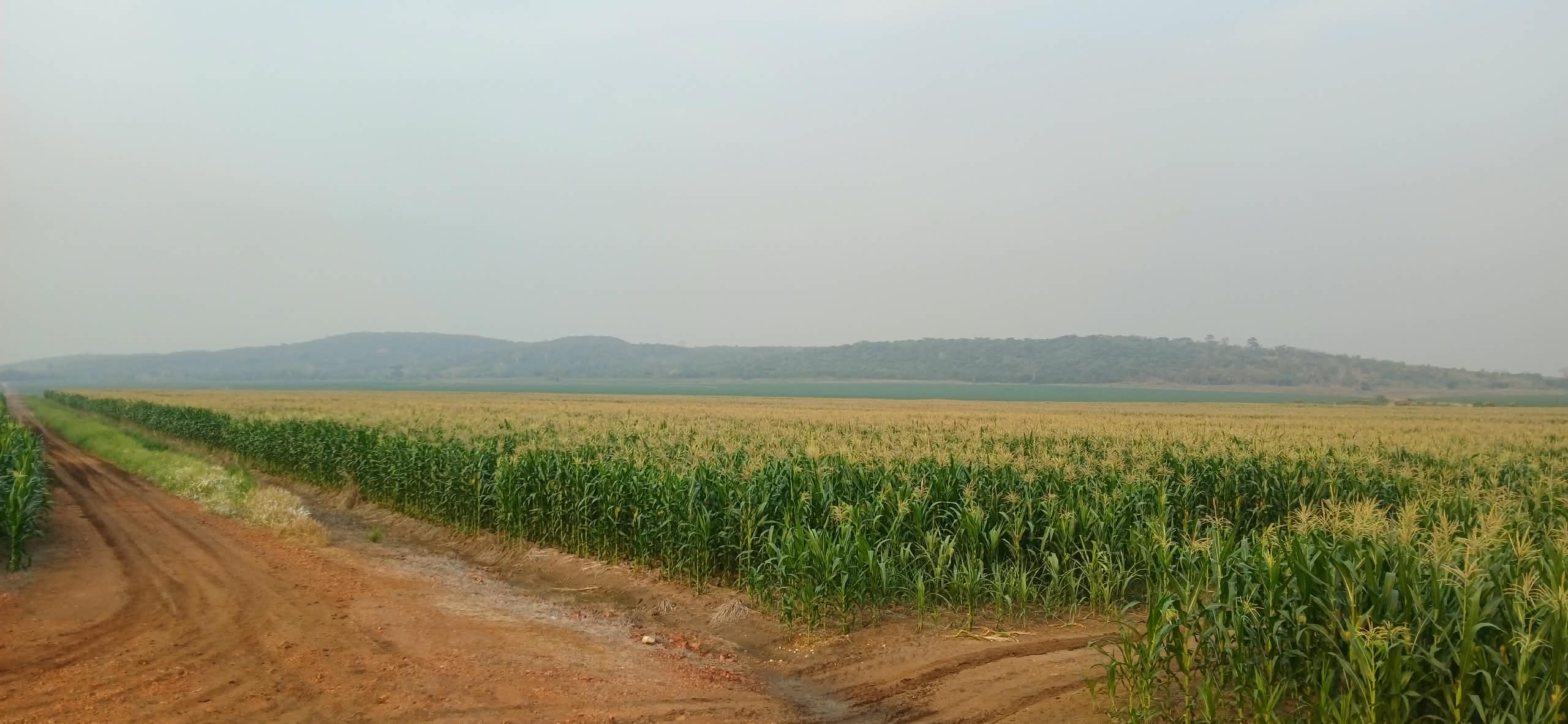
Fire belt spreading and calibration
Center-pivot irrigation monitoring
Fertilizer spreader calibration
The Problem
A 277-hectare farm needed reliable protection against dry-season fires, consistent irrigation coverage, and precise fertilizer application, each requiring careful calibration and hands-on supervision to get right.
The Approach
Three separate field operations, each handled with the same underlying discipline: calibrate first, verify, then execute at scale.
Implementation
For fire belt establishment, we attached a mini spreader to a tractor and calibrated it to spread sorghum seed evenly along the farm's edges as a fire barrier for the dry season, harrowing over it afterward, with me supervising to keep the process on track. For irrigation, I directly operated and monitored a center-pivot system, checking that the pivot was moving correctly and that every sprinkler head was functioning. For fertilizer application, I worked alongside the farm's agronomist, learning what to watch for while we calibrated a 6m³ fertilizer spreader to get the correct rate and drop per pass, and calculated the number of bags needed.
Result
All three operations were completed successfully as part of ongoing farm management during my time at Goshen Porche Ranch.
Lessons Learned
Precision matters as much in agriculture as it does in code or data. A wrongly calibrated spreader wastes material and produces uneven results, in the same way an off-by-one error breaks a program. This is where I first learned to think in terms of inputs, calibration, and verified outputs, the same mental model I now apply to data and software.